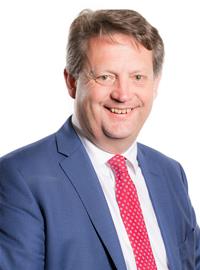
Transport debate in the Seventh Senedd has centred on the M4 around Newport and the Menai crossings, following the Deputy Minister's announcement of 6 October. Members have also argued over rail devolution and funding, bus reform and the new north-south coach service, the 20 mph default limit, and school transport.
The main arguments
Mark Hooper (Plaid Cymru) announced an 18-month study of roads-based and engineering options for the M4 around Newport, including closing some junctions. Welsh Labour's Jayne Bryant and the Conservatives' Natasha Asghar said closures would push traffic and pollution into Newport streets. Contributions: [1]
May 2021Mar 2026
2,248 contributions in the Sixth Senedd touched on this. The busiest month was Mar 2023, with 194.
Who raises it
Labour57%
Conservative30%
Plaid12%
Lib Dem1%
Independent0%
Reform0%
Share of the 1,987 contributions on this subject, by the speaker's party.
On the M4 route, Darren Millar (Conservatives) urged a fresh look at the black route. Paul Rock (Greens) welcomed its exclusion. Jason O'Connell (Reform UK) said Reform would build a relief road. Mr Hooper asked opponents which road, on what route and how fast. Contributions: [1][2][3][4]
Mr Hooper said the Government is committed to a third Menai crossing. Officials said development would take three to five years. Reform's Cai Parry-Jones and John Clark questioned how it would be paid for, and Janet Finch-Saunders (Conservatives) welcomed the commitment. Contributions: [1][2][3][4][5]
On rail, Mr Hooper and Jane Dodds (Liberal Democrats) back devolving infrastructure. Jason O'Connell (Reform UK) opposes further devolution and questioned Welsh Government capacity. Welsh Labour's Huw Thomas pointed to the £14 billion UK commitment. Contributions: [1][2][3][4]
On buses, Mr Hooper announced a north-south coach service from the autumn and confirmed bus franchising. Members including Vikki Howells (Labour) and Jason O'Connell (Reform UK) welcomed it with caveats about reliability. Ken Skates (Labour) urged a £2 fare cap. Contributions: [1][2][3][4][5]
In the 20 mph debate, Reform UK's Jason O'Connell and Llŷr Powell sought to scrap the default limit, citing cost and casualty figures. Vikki Howells (Labour), Paul Rock (Greens) and Mark Hooper (Plaid Cymru) defended it on safety evidence. Contributions: [1][2][3][4][5]
On school transport, Llŷr Powell (Reform UK) and Paul Davies (Conservatives) asked for a review of the Learner Travel Measure over inclines and rural distances. Jayne Bryant (Labour) said councils need extra funding for any improvements. Contributions: [1][2][3]
Where the parties stand
Plaid Cymru
Mark Hooper, for the Government, set out a third Menai crossing, an M4 study, bus franchising, a north-south coach and rail devolution. He supports the 20 mph default on safety grounds. Contributions: [1][2][3][4]
Welsh Labour
Members oppose M4 junction closures and back a relief road. They welcomed the Menai crossing, the £14 billion UK rail commitment and bus reform, defend 20 mph, and want a £2 fare cap. Contributions: [1][2][3][4][5][6]
Welsh Conservatives
Members back the black route and oppose junction closures. They press on potholes, argue for scrapping the 20 mph default, criticised active travel spending, and welcomed the north-south coach. Contributions: [1][2][3][4][5][6]
Reform UK
Members want an M4 relief road, scrapping of the default 20 mph limit and no further rail devolution. They question how the Menai crossing will be funded and raise school transport cuts. Contributions: [1][2][3][4][5]
Welsh Liberal Democrats
Jane Dodds presses for rail devolution, investment in buses and rail rather than roads, and a through TrawsCymru T4 service. She backs the £1 youth bus fare. Contributions: [1][2][3][4]
Wales Green Party
Paul Rock welcomed confirmation that the black route will not be revisited. He asked how any M4 scheme would be funded without hurting rail and bus investment, and defends 20 mph. Contributions: [1][2]
What the government is being pressed on
1Reform's Cai Parry-Jones asked where the money for the third Menai crossing will come from. Mr Hooper said the Government is committed with no ifs or buts. Officials said development runs three to five years, with construction in eight to ten. Contributions: [1][2][3]
2Jayne Bryant (Labour) asked the Minister to rule out junction closures. Mr Hooper said one junction would close fully and others see lesser changes, and he would engage councils, traders and communities. Contributions: [1][2]
3Vikki Howells (Labour) asked why the M4 review takes 18 months. Mr Hooper called it a relatively fast period and said the Government is not standing still, with improvements planned meanwhile. He said resilience studies will be published in full. Contributions: [1][2]
4Mike Hedges (Labour) asked how devolved rail funding should be calculated. Elin Jones (Plaid Cymru) said fair rail funding and HS2 are priorities and she raised them with the Chief Secretary to the Treasury. Contributions: [1][2]
5Members asked what Welsh Government will do on bus fares and services. Ken Skates urged a £2 cap. Jane Dodds raised the T4 break at Merthyr. Mr Hooper said pricing must be right and franchising allows a single ticket. Contributions: [1][2][3]
What the public is asking for
Petitions include 'Stop junction closures in Newport' (13,859 signatures, open) and 'Build a new crossing over the Menai' (7,788, completed). Smaller ones cover the Garw route (1,290), 20 mph (280), cycle spending (27), fare caps (12) and M4 junctions (9).
Who ministers are meeting
Ministers have met port operators and groups, rail bodies including Great British Railways and the Railway Industry Association, trade unions with Transport for Wales, and local bus officers. They also met cycling, road safety, logistics and passenger groups, and a school transport campaign.
In the Sixth Senedd (2021 to 2026)
From the previous Senedd's record, for issues that run across both. The rest of this analysis covers the Seventh Senedd only.
In the Sixth Senedd, transport debate turned on roads versus public transport. The 2023 roads review, the default 20 mph limit, bus support after COVID, electric vehicle charging and rail funding, especially HS2, were the main disputes.
After the 2023 roads review, Natasha Asghar (Conservatives) called the announcement a shambles. Jane Dodds (Liberal Democrats) supported the review on climate grounds. Rhun ap Iorwerth (Plaid Cymru) said it made the case for a Menai crossing. Contributions: [1][2][3][4]
On 20 mph, Lee Waters (Labour) said the limit was not blanket because authorities could vary it. Natasha Asghar (Conservatives) opposed a default limit and backed 20 mph near schools. Jane Dodds cited evidence that slower speeds save lives. Contributions: [1][2][3]
On rail, Plaid Cymru's Delyth Jewell and Siân Gwenllian called for infrastructure devolution and HS2 consequentials. Rebecca Evans (Labour) said Wales had missed out on around £350 million by the end of 2024-25. Contributions: [1][2][3]
On buses, Lee Waters (Labour) said over £150 million kept services running after COVID. Heledd Fychan (Plaid Cymru) and Jane Dodds pressed on service cuts and free travel for under-25s. Contributions: [1][2][3]
Written by AI on 30 October 2026 from 240 contributions in the Senedd between 12 May 2026 and 22 October 2026, with the petitions and ministers' meetings on this brief. Each point links to the contributions it draws on; check them before quoting. How the analysis is written.
Where things stand
Statistics published by the Welsh Government. Each chart covers the years since the 2016 Senedd election, or as far back as the figures go, and marks each election since.
Bus journeys
71.7 million
2024-25
A year earlier
71.4 million(2023-24)
Passenger journeys on local bus services in Wales each financial year, in millions.
The Department for Transport collects these figures from bus operators, and advises caution with single year-on-year changes.
Create a more integrated public transport network by expanding tap‑on, tap‑off, pay‑as‑you‑go ticketing, introducing simpler and fairer fares across bus and rail to improve services for passengers and communities across Wales, making travel simpler and more affordable.
Continue to provide £1 single bus fares and £3 day tickets for children and young people aged 5‑21 and retain bus passes for over 60s and disabled people.
Latest figure: Bus journeys, 71.7 million, 2024-25.
Transform bus services through franchising, bringing routes, fares and standards under a single publicly accountable system that puts passengers first. We will enhance links between communities through the new North‑South coach service and deliver an integrated network that improves access to services, supports economic growth, and helps reduce carbon emissions.
Latest figure: Bus journeys, 71.7 million, 2024-25.
Put active travel at the heart of Wales’s transport system, making it a practical, safe and inclusive choice for more everyday journeys. We will reduce barriers to walking, wheeling and cycling to support our ill health prevention mission, and promote wellbeing and economic opportunity.
Put children and young people at the heart of a joined‑up approach to learner travel, strengthening cross‑government working so that public services work together to improve access to education, including by addressing barriers to Welsh‑medium education.
Work with Welsh ports to strengthen their resilience and maximise their contribution to the Welsh economy, while pursuing full devolution of port regulation.
Fight for the rail funding we are owed and that we need to invest in Welsh rail – including consequential funding from HS2 – and for rail to be devolved.
Source: Welsh Government, Programme for government 2026 to 2030: New ambition for Wales, first published on 10 September 2026. Contains public sector information licensed under the Open Government Licence v3.0. Mentions are found by matching the names of plans, bodies and schemes; a mention says nothing about progress.
From the Welsh Government
The Welsh Government's latest press releases and Cabinet statements on this brief.
The Deputy Minister for Transport, Mark Hooper, has welcomed new figures showing a continued fall in road collisions and casualties across Wales, with clear reductions seen on roads with 20mph and 30mph speed limits.
Go-ahead for a third Menai crossing and plans for roads-based solution for the M4, along with a programme of other transport measures, have been announced today.
Deputy Minister for Transport Mark Hooper visited Tonyrefail Community School Thursday 24 September to launch new virtual reality (VR) road safety content aimed at young drivers.
In the news
The latest headlines on this brief, linking to each outlet's story.
How these votes work: the Senedd first votes on the motion as written. If that fails, it votes on each amendment in turn, then on the motion with any agreed changes.
Votes are tagged from their own titles and the agenda item they were held under.
Each bar is the share of that party's speeches and questions in the Sixth Senedd that touched this brief, so large and small parties can be compared. The upright line marks the chamber as a whole: 1.4%.
Ministers' meetings with outside organisations and their engagements on this brief, from the register the Welsh Government publishes every three months. 3 since the 2026 election; the latest:
8 August 2026
Menai Suspension Bridge 200th Anniversary Event
Meeting, First Minister of Wales
15 June 2026
National Road Safety Board
Meeting, Deputy Minister for Transport
09/0/2021
20mph visit to St Brides Major Church in Wales Primary
48% of Welsh adults said the condition of streets, roads and pavements would be very important to their vote.
37% of Welsh adults said public transport would be very important to their vote.
15% of Welsh adults said the level of traffic congestion would be very important to their vote.
Ipsos asked 747 Welsh adults aged 16+ between 2 April 2026 and 8 April 2026, before the 2026 Senedd election. People could choose as many issues as they liked. More on public opinion.
Written questions
471 written questions to the Welsh Government on this brief in the Sixth Senedd, 463 answered so far. The latest:
The introduction of a default 20mph speed limit on restricted roads in Wales in September 2023 generated significant public debate. The policy increased the share of roads with a 20mph limit from 2% to 37% as of September 2023.
Contributions tagged in each month of the Sixth Senedd. No sittings were held in August 2021, August 2022, August 2023, December 2024, February 2025, March 2025, April 2025, May 2025, June 2025, July 2025, August 2025, September 2025, October 2025, November 2025 and December 2025.Show the numbers
Month
Contributions
May 2021
3
June 2021
55
July 2021
20
August 2021
No sittings
September 2021
39
October 2021
22
November 2021
22
December 2021
22
January 2022
35
February 2022
24
March 2022
28
April 2022
5
May 2022
29
June 2022
66
July 2022
52
August 2022
No sittings
September 2022
25
October 2022
43
November 2022
29
December 2022
How this brief is put together
This brief follows the Programme commitments listed above and tags the record with the phrases below. Keyword matching can miss business that discusses the issue in other words, and can tag a passing mention.
Show the phrases it uses
A contribution is tagged when its English text contains one of these phrases. Capital letters don't matter, except in abbreviations, which must match exactly. It is also tagged when the title of the agenda item or question it was part of contains one, as long as the contribution is at least 30 words long. The brief is also tagged whenever one of its themes is.
People killed in road collisions in Wales that were reported to the police, each calendar year. A death counts if it happened within 30 days of the collision.
Deaths are shown because police forces in Wales have been changing how they record serious injuries since 2023, so figures for serious injuries can't be compared over time.